I pray like clockwork and IslamicFinder's Athan keeps me on schedule. The mind remembers surahs, the eyes focus on the prayer mat- at times though, they wander as if looking for an answer to a question that has already been answered, the lips silently read the surahs, hands are folded- right over left and the feet are planted firmly on the ground.
But, going through the motions doesn't mean anything if the intention is not right.
Why do YOU pray?
ps.I was asked this question recently and I found it a little hard to summarize effectively. Well, I guess I only had one point, which was praying is obeying the commands of Allah swt, and then I got distracted and went slightly off topic.
Showing posts with label miracles in the Quran. Show all posts
Showing posts with label miracles in the Quran. Show all posts
Thursday, April 15, 2010

Wednesday, September 2, 2009
Ramadan: Fact/Fiction
Now, with everything else, people have managed to come up with things just to confuse and mislead everyone else. These are some of the things that I have heard/been told about Ramadan.
1) Showering (excessively) is makruh, especially close to the time at which one can break his fast.
I read up and this is what I found: Abu Dawood (2365) narrated that one of the companions of the Prophet (peace and blessings of Allaah be upon him) said: I saw the Messenger of Allaah (peace and blessings of Allaah be upon him) pouring water over his head when he was fasting, because of thirst or heat. Classed as saheeh by al-Albaani in Saheeh Abi Dawood.
2) Stop eating 10 minutes before Fajr.
One of the reprehensible innovations that have appeared in our times is giving the second adhaan approximately twenty minutes before Fajr in Ramadaan, and extinguishing the lamps which indicate that it is haraam to eat and drink for those who want to fast. Those who introduced this innovation claim that they are erring on the side of caution with regard to an act of worship.
3) Saying "I'm hungry" or counting down the minutes to iftar invalidates the fast.
Praise be to Allaah.
1) Showering (excessively) is makruh, especially close to the time at which one can break his fast.
I read up and this is what I found: Abu Dawood (2365) narrated that one of the companions of the Prophet (peace and blessings of Allaah be upon him) said: I saw the Messenger of Allaah (peace and blessings of Allaah be upon him) pouring water over his head when he was fasting, because of thirst or heat. Classed as saheeh by al-Albaani in Saheeh Abi Dawood.
2) Stop eating 10 minutes before Fajr.
One of the reprehensible innovations that have appeared in our times is giving the second adhaan approximately twenty minutes before Fajr in Ramadaan, and extinguishing the lamps which indicate that it is haraam to eat and drink for those who want to fast. Those who introduced this innovation claim that they are erring on the side of caution with regard to an act of worship.
Shaykh Ibn ‘Uthaymeen was asked about some timetables which give the time of imsaak as being approximately one-quarter of an hour before Fajr. He said:
This is a kind of bid’ah (innovation) which has no basis in the Sunnah. Rather the Sunnah is to do the opposite, because Allaah says in His Holy Book (interpretation of the meaning):
“and eat and drink until the white thread (light) of dawn appears to you distinct from the black thread (darkness of night)”
[al-Baqarah 2:187]
And the Prophet (peace and blessings of Allaah be upon him) said: “Bilaal gives the adhaan at night, so eat and drink until you hear the adhaan of Ibn Umm Maktoom, for he does not give the adhaan until dawn comes.” This imsaak which some of the people do is an addition to that which Allaah has enjoined, so it is false. It is a kind of extremism in religion, and the Prophet (peace and blessings of Allaah be upon him) said: “Those who go to extremes are doomed, those who go to extremes are doomed, those who go to extremes are doomed.”
Narrated by Muslim, 2670
And Allaah knows best.3) Saying "I'm hungry" or counting down the minutes to iftar invalidates the fast.
Praise be to Allaah.
The time of iftaar is the time when the fast ends, which is the time of Maghrib prayer. There is no sin on the one who asks about the time of iftaar so that he may enjoy the things that Allaah has permitted to him of food, drink and intercourse, and to feel the joy of having completed his worship. It was narrated that Abu Hurayrah (may Allaah be pleased with him) said: The Messenger of Allaah (peace and blessings of Allaah be upon him) said: “The fasting person has two moments of joy: when he breaks his fast he rejoices at breaking his fast, and when he meets his Lord he will rejoice at his fasting.” Narrated by al-Bukhaari, 1805; Muslim, 1151.
Al-Haafiz ibn Hajar (may Allaah have mercy on him) said:
Al-Qurtubi said: What this means is that he rejoices at the disappearance of his hunger and thirst when it becomes permissible for him to break his fast. This joy is something natural and this is the first meaning that comes to mind. And it was said that his joy when breaking the fast is because he has completed his fast and finished his act of worship, and his Lord is allowing him now to eat and drink, which will help him to fast more.
Taken from Islam QA: Issues of Fasting
Saturday, August 22, 2009
Thursday, August 6, 2009
Innovations in Religion
15th of Shaaban
In the Sunan of Ibn Majah, it is narrated with a weak chain, on the authority of ‘Ali that the Prophet, may blessings and peace of God be upon him, said the following:
If it is the night of the middle of Sha’baan, then enliven its night and fast its day, for in it, God descends to the heaven once the sun sets and says, “Is there anyone seeking forgiveness so that I can forgive him? Is there anyone seeking provision so that I can give him? Is there anyone tribulated that I can relieve his tribulation? Is there? Is there?” until the entrance of dawn.
It is narrated that the tabi’in (the generation that directly followed the time of the Prophet, peace and blessings of God be upon him) of Shaam used to glorify this night. Amongst them are Khalid b. Ma’dan, Makhul, Luqmaan b. ‘Aamir, and others. They used to exert themselves in worship during this night. It was from them that people learned the benefit and the glorification of this night.
On the other hand, the scholars of Hijaaz differed with them and refused to acknowledge acts of glorification and worship that were performed specifically in observation of mid-Sha’baan. From among them are ‘Ata’ and Ibn Abi Mulayah. Abdu al-Rahman b. Zaid b. Aslam narrated the same from the jurists of the people of
While the scholars of Shaam acknowledged enlivening mid-Sha’baan, they differed on the method of doing so. One opinion is that it is preferred to enliven it in the masjid in a congregation. Khalid b. Ma’dan, Luqmaan b. ‘Aamir, and others used to put on their best clothes, perfume themselves with incense, put on kuhl, and spend the night in the masjid. Ishaaq b. Rahwayh concurred with them and said “Establishing it in the masjid in congregation is not an innovation.” This was narrated by Harb al-Karmaani in his Masaai’l. According to another opinion, however, it is disliked to congregate on that night in the masjid to pray, tell stories, and to supplicate, while it is not disliked for one to enliven that night with prayers by himself. This is the opinion of al-Awza’i, the imam of the people of Shaam, their jurist and scholar.
Based on the fact that there are valid differences of opinion between the scholars, no one should condemn another for enlivening this night or for not doing so. Those who choose to seek the benefit of mid-Sha’baan by enlivening its night and fasting its day are following the opinion of Imam al-Awzaa’i and others. As for those who choose not to do so, they are abiding by the opinion of Imam Malik and others. Hence, there is no blame on choosing to follow either opinion.
Actions recommended by some scholars to perform during this night: As mentioned previously, it is recommended to bring this night to life with prayers, seeking forgiveness, supplication, and remembrance of God, and to fast the day of the fifteenth of Sha’baan. Many scholars have said it is good to read the Qur’anic chapter Yasin three times during this night (which begins after sunset). The first reading should be done with the intention of asking for a long life; the second with the intention of protection from tribulation; and the third with the intention of being in need only of God and leaving reliance on people. After each time this chapter is read, it is recommended to read the following supplication: In the Name of God, the Compassionate, the Merciful. O God, O Bestower upon Whom none can bestow, O Possessor of Sublimity and Honor, O Possessor of Might and Favor, there is no deity but You, Who subdues disputers, Who grants protection to those seeking it, Who is the Safe Harbor for the fearful. O God, if You have inscribed me in Your Source Book as someone destined to be miserable and deprived of blessing or straitened in provision, then I beseech You to erase such from the Book, and rather to establish me with Yourself as one destined to be fortunate and to have adequate sustenance and access to wealth; for You have said, and Your word is the Truth, in Your own Book, revealed to Your Messenger and Prophet, “God erases whatever He wishes, or establishes it, and with Him is the Source Book” (Qur’an 13:39). My God! By Your most Sublime Manifestation on this most honored night of mid-Sha’baan, in which every important matter is differentiated and then bound together, remove from my destiny any tribulation, whether I be conscious of it or not, and forgive me that which You are most cognizant of. O God, make me one of Your servants with the greatest good fortune and portion of that which You distribute on this night, of guiding light, or apportioned mercy, or sustenance, or bounty given Your believers. O God! O God! There is no deity but You! O God, give me a devout, pure heart that is free of associating partners with You, neither ungrateful nor miserable—a sound heart that is humble and beseeching. O God, fill my heart with Your Light and the Lights of Your Manifestations, Your Beauty, Perfection and Love, Your Infallibility, Power, and Knowledge. O Most Merciful of the Merciful! And may God, the Exalted, bless our Master Muhammad and his family and companions and grant them peace.
Taken from :Zaytuna Institute & Academy
VS
Firstly:
What is narrated concerning the virtue of praying, fasting and worshipping on the fifteenth of Sha’baan (al-nusf min Sha’baan) does not come under the heading of da’eef (weak), rather it comes under the heading of mawdoo’ (fabricated) and baatil (false). So it is not permissible to follow it or to act upon it, whether that is in doing righteous deeds or otherwise.
A number of scholars ruled that the reports concerning that were false, such as Ibn al-Jawzi in his book al-Mawdoo’aat, 2/440-445; Ibn Qayyim al-Jawziyyah in al-Manaar al-Muneef, no. 174- 177; Abu Shaamah al-Shaafa’i in al-Baa’ith ‘ala Inkaar al-Bida’ wa’l-Hawaadith, 124-137; al-‘Iraaqi in Takhreej Ihyaa’ ‘Uloom il-Deen, no. 582. Shaykh al-Islam [Ibn Taymiyah] narrated that there was consensus on the fact that they are false, in Majmoo’ al-Fataawa, 28/138.
Shaykh Ibn Baaz (may Allaah have mercy on him) said in Hukm al-Ihtifaal bi Laylat al-Nusf min Sha’baan (Ruling on celebrating the fifteenth of Sha’baan):
Celebrating the night of the fifteenth of Sha’baan (Laylat al-Nusf min Sha’baan) by praying etc, or singling out this day for fasting, is a reprehensible bid’ah (innovation) according to the majority of scholars, and there is no basis for this in sharee’ah.
And he (may Allaah have mercy on him) said:
There is no saheeh hadeeth concerning the night of the fifteenth of Sha’baan (Laylat al-Nusf min Sha’baan). All the ahaadeeth that have been narrated concerning that are mawdoo’ (fabricated) and da’eef (weak), and have no basis. There is nothing special about this night, and no recitation of Qur’aan or prayer, whether alone or in congregation, is specified for this night. What some of the scholars have said about it being special is a weak opinion. It is not permissible to single it out for any special actions. This is the correct view. And Allah is the Source of strength.
Fataawa Islamiyyah, 4/511.
Secondly:
Even if we assume that the hadeeth is da’eef (weak) and not mawdoo’ (fabricated), the correct scholarly view is that weak ahaadeeth should not be followed at all, even if they speak of righteous deeds or of targheeb and tarheeb (promises and warnings). The saheeh reports are sufficient and the Muslim has no need to follow the da’eef reports. Nothing is known in Islam to suggest that this night or day is special, either from the Prophet (peace and blessings of Allah be upon him) or from his companions.
The scholar Ahmad Shaakir said: There is no difference between rulings or righteous deeds; we do not take any of them from da’eef reports, rather no one hast he right to use any report as evidence unless it is proven to be soundly narrated from the Messenger of Allah (peace and blessings of Allah be upon him) in a saheeh or hasan hadeeth.
Al-Baa’ith al-Hatheeth, 1/278.
For more information, see: al-Qawl al-Muneef fi Hukm al-‘Aml bi’l-Hadeeth al-Da’eef.
And Allah knows best.
Taken from: Islam Question and Answer
Did you do anything out of the ordinary today because it is the 15th of Shaaban?
Wednesday, May 27, 2009
This is My Hijab
(@ Saafir's suggestion. A good reminder for me and everyone else. It says "Let's embrace hijab"....yeah, boys, you too :D navel to knee okay?)
Friday, May 22, 2009
Angels & Demons: Science in the Quran
One of my previous posts showed statistical miracles in the Quran. Most of you would probably have gone "wow, that's cool" (I'm assuming here, please correct me if I am wrong) but someone shared with me a different perspective on the issue.
Angels & Demons is out in the theatres right now in Perth but I don't think I will be going to watch it. Movies based on books are always of a great disappointment to me.
Anyways, can Science and Religion co exist? I believe the answer is Yes.
But what about trying to find evidence of science IN religion?
Here is a different perspective on the issue(in dot points)...(I did not get permission to reproduce this perspective so yeah, I don't think the person minds though and yeah, I added some things on my own):
-Scientific theories are produced by Man.
-Thus, prone to error?
-Many scientific theories are now being disputed.
-Hence the danger of trying to find science in religion OR trying to say Look here, my theory is in the Quran therefore it MUST be right OR trying to translate the words of the Quran to fit the scientific theory.
-The Quran is a miracle in itself.
-Not written by Man.
-PERFECT, NO ERRORS.
-100 years from now, if a scientific theory 'found' in the Quran is disputed, does that mean the Quran is wrong?
-You can argue that the scientist translated the Quran erroneously but, it still casts the Quran in a not so good light to the disbelievers.
-There was a scientist/professor who proclaimed "There is no God but Allah and Muhammad is his messengers" based on a single ayah in the Quran. I have previously posted it, the ayah that scientists/ various religious speakers have said proves the existence of pain receptors in the skin because in the Quran it says that the skin of the people in Hell will be replaced so that they may feel the punishment again.
-What if 1000 years from now, scientists discover that pain receptors in the skin aren't actually responsible for sensation of pain?
Thoughts? Comments? Opinions?
Angels & Demons is out in the theatres right now in Perth but I don't think I will be going to watch it. Movies based on books are always of a great disappointment to me.
Anyways, can Science and Religion co exist? I believe the answer is Yes.
But what about trying to find evidence of science IN religion?
Here is a different perspective on the issue(in dot points)...(I did not get permission to reproduce this perspective so yeah, I don't think the person minds though and yeah, I added some things on my own):
-Scientific theories are produced by Man.
-Thus, prone to error?
-Many scientific theories are now being disputed.
-Hence the danger of trying to find science in religion OR trying to say Look here, my theory is in the Quran therefore it MUST be right OR trying to translate the words of the Quran to fit the scientific theory.
-The Quran is a miracle in itself.
-Not written by Man.
-PERFECT, NO ERRORS.
-100 years from now, if a scientific theory 'found' in the Quran is disputed, does that mean the Quran is wrong?
-You can argue that the scientist translated the Quran erroneously but, it still casts the Quran in a not so good light to the disbelievers.
-There was a scientist/professor who proclaimed "There is no God but Allah and Muhammad is his messengers" based on a single ayah in the Quran. I have previously posted it, the ayah that scientists/ various religious speakers have said proves the existence of pain receptors in the skin because in the Quran it says that the skin of the people in Hell will be replaced so that they may feel the punishment again.
-What if 1000 years from now, scientists discover that pain receptors in the skin aren't actually responsible for sensation of pain?
Thoughts? Comments? Opinions?
Wednesday, May 20, 2009
Miracles in the Quran
From: http://www.ummah.net/library/mirquran2/index.html
Study conducted by Dr. Tariq Al-Suwaidan. A Well known scholar from the Muslim Brotherhood, Ikhwan Al-muslimoon. Islamic Gateway ummah.net brings you a glimpse of this study.
Study conducted by Dr. Tariq Al-Suwaidan. A Well known scholar from the Muslim Brotherhood, Ikhwan Al-muslimoon. Islamic Gateway ummah.net brings you a glimpse of this study.
| Word/Meaning | Mentioned in the Quran | |
| Al-Dunya This world | 115 | |
| Al-Akhira The hereafter | 115 | |
| Word/Meaning | Mentioned in the Quran | |
| Al-Mala'ikah Angles | 88 | |
| Al-Shayateen Satan | 88 | |
| Word/Meaning | Mentioned in the Quran | |
| Al-Hayat Life | 145 | |
| Al-Maout Death | 145 | |
| Word/Meaning | Mentioned in the Quran | |
| Al-Rajul Man | 24 | |
| Al-Mar'ha Women | 24 | |
| Word/Meaning | Mentioned in the Quran | |
| Al-Shahr Month | 12 | |
| Word/Meaning | Mentioned in the Quran | |
| Al-Yahom Day | 365 | |
| Word/Meaning | Mentioned in the Quran | |
| Al-bahar Sea | 32 | |
| Al-bar Land | 13 | |
| If we add up the total words of both "sea" and "land" we get 45. Now if we do a simple calculation: 32/45 X 100% = 71.11111111% 13/45 X 100% = 28.88888888% Above is what we know today, the percentages of Water (Sea) and Land in the world. Yet another miracle in the Quran. | ||
Friday, May 15, 2009
I want to repent but...
while Googling something that someone had shared with me, I came across this awesome text entitled 'I want to repent, but...'
Here is the link for you to download the text: http://www.islamhouse.com/p/51819
The text addresses issues related to repentance and is most useful for those who are hesitant or unsure about repenting.
Proof that this text is an awesome read:
The problem is that many people nowadays do not place their hope and fear in Allaah. They disobey Him by committing all manner of sins, day and night. There are those who are being tested by the idea of regarding sins as insignificant, so you may see one of them regarding certain “minor sins” as inconsequential, so he might say, “What harm can it possibly do if I look at or shake hands with a (non-mahram) woman?” They think nothing of looking at women in magazines and on TV shows. Some of them, when they are told that this is haraam, may even facetiously ask, “So how bad can it be? Is it a major sin or a minor sin ?” Compare this attitude with that reflected in the following reports narrated by Imaam al-Bukhaari (may Allaah have mercy on him):>Anas (may Allaah be pleased with him) said: “You do things which in your eyes are less significant than a hair, but at the time of the Messenger of Allaah (peace and blessings of Allaah be upon him), we used to count them as things that could destroy a man.”Ibn Mas’ood (may Allaah be pleased with him) said: “The believer regards his sin as if he were sitting beneath a mountain which he fears may fall on him, whereas the sinner regards his sin as if a fly lands on his nose and he swipes it away.”
Such a great and important matter must necessarily have conditions attached to it. The scholars have described the conditions of repentance, based on the Qur’aan and Sunnah. They include:
Immediate cessation of the sin.
Regret for what is past.
Determination not to return to the sin.
Restitution of victims’ rights, or seeking their forgiveness.
Abu Sa’eed Sa’d ibn Maalik ibn Sinaan al-Khudri (may Allaah be pleased with him) reported that the Prophet of Allaah (peace and blessings of Allaah be upon him) said: “There was among the people who came before you a man who killed ninety-nine people. Then he asked about the most knowledgeable person on earth, and was directed to a hermit, so he went to him, told him that he had killed ninety-nine people, and asked if he could be forgiven.
Here is the link for you to download the text: http://www.islamhouse.com/p/51819
The text addresses issues related to repentance and is most useful for those who are hesitant or unsure about repenting.
Proof that this text is an awesome read:
The problem is that many people nowadays do not place their hope and fear in Allaah. They disobey Him by committing all manner of sins, day and night. There are those who are being tested by the idea of regarding sins as insignificant, so you may see one of them regarding certain “minor sins” as inconsequential, so he might say, “What harm can it possibly do if I look at or shake hands with a (non-mahram) woman?” They think nothing of looking at women in magazines and on TV shows. Some of them, when they are told that this is haraam, may even facetiously ask, “So how bad can it be? Is it a major sin or a minor sin ?” Compare this attitude with that reflected in the following reports narrated by Imaam al-Bukhaari (may Allaah have mercy on him):>Anas (may Allaah be pleased with him) said: “You do things which in your eyes are less significant than a hair, but at the time of the Messenger of Allaah (peace and blessings of Allaah be upon him), we used to count them as things that could destroy a man.”Ibn Mas’ood (may Allaah be pleased with him) said: “The believer regards his sin as if he were sitting beneath a mountain which he fears may fall on him, whereas the sinner regards his sin as if a fly lands on his nose and he swipes it away.”
Such a great and important matter must necessarily have conditions attached to it. The scholars have described the conditions of repentance, based on the Qur’aan and Sunnah. They include:
Immediate cessation of the sin.
Regret for what is past.
Determination not to return to the sin.
Restitution of victims’ rights, or seeking their forgiveness.
Abu Sa’eed Sa’d ibn Maalik ibn Sinaan al-Khudri (may Allaah be pleased with him) reported that the Prophet of Allaah (peace and blessings of Allaah be upon him) said: “There was among the people who came before you a man who killed ninety-nine people. Then he asked about the most knowledgeable person on earth, and was directed to a hermit, so he went to him, told him that he had killed ninety-nine people, and asked if he could be forgiven.
The hermit said, ‘No,’ so he killed him, thus completing one hundred. Then he asked about the most knowledgeable person on earth and was directed to a scholar. He told him that he had killed one hundred people, and asked whether he could be forgiven.
The scholar said, ‘Yes, what could possibly come between you and repentance? Go to such-and-such a town, for in it there are people who worship Allaah. Go and worship with them, and do not go back to your own town, for it is a bad place.”
So the man set off, but when he was halfway there, the angel of death came to him, and the angels of mercy and the angels of wrath began to argue over him. The angels of mercy said: ‘He had repented and was seeking Allaah.’ The angels of wrath said: ‘He never did any good thing.’
An angel in human form came to them, and they asked him to decide the matter. He said: ‘Measure the distance between the two lands (his home town and the town he was headed for), and whichever of the two he is closest to is the one to which he belongs.’
So they measured the distance, and found that he was closer to the town for which he had been headed, so the angels of mercy took him.” (Agreed upon). According to a report in al-Saheeh: “The righteous town was a hand-span closer, so he was counted as one of its people.” According to another report in al-Saheeh: “Allaah commanded (the evil town) to move away, and (the righteous town) to move closer, and said: ‘Measure the distance between them,’ and they found him to be a hand-span closer to the righteous town, so he was forgiven.”
Sunday, May 10, 2009
Miracles in the Quran: Pain receptors
"Those who reject our signs, We shall soon cast into the Fire; as often as their skins are roasted through, We shall change them for fresh skins, that they may taste the Penalty: for Allah is Exalted in Power, Wise." [Al-Qur’an 4:56]
Not too long ago, it was thought that the sense of pain was solely dependent on the brain. However, recent science research has shown that there are pain receptors present in the skin. If these pain receptors were damaged, but the brain is still functioning, the person would still not be able to sense the pain.
Not too long ago, it was thought that the sense of pain was solely dependent on the brain. However, recent science research has shown that there are pain receptors present in the skin. If these pain receptors were damaged, but the brain is still functioning, the person would still not be able to sense the pain.
Friday, May 8, 2009
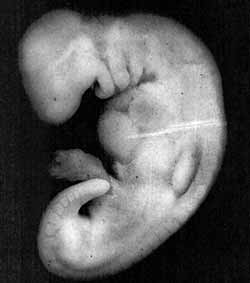
Miracles in the Quran : Embryology (taken from www.islam-guide.com)
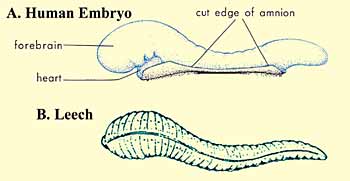
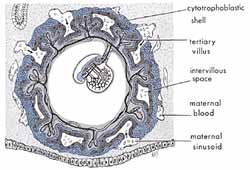
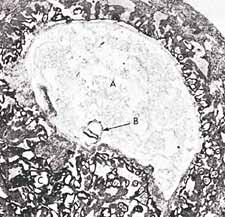
"We created man from an extract of clay. Then We made him as a drop in a place of settlement, firmly fixed. Then We made the drop into an alaqah (leech, suspended thing, and blood clot), then We made the alaqah into a mudghah (chewed substance)... " (Quran, 23:12-14)
alaqah has three meanings: (1) leech, (2) suspended thing, (3) blood clot
|
|
| Figure 1: Drawings illustrating the similarities in appearance between a leech and a human embryo at the alaqah stage. (Leech drawing from Human Development as Described in the Quran and Sunnah, Moore and others, p. 37, modified from Integrated Principles of Zoology, Hickman and others. Embryo drawing from The Developing Human, Moore and Persaud, 5th ed., p. 73.) |
| Figure 2: We can see in this diagram the suspension of an embryo during the alaqah stage in the womb (uterus) of the mother. (The Developing Human, Moore and Persaud, 5th ed., p. 66.) (Click on the image to enlarge it.) |
|
| | |
| Figure 3: In this photomicrograph, we can see the suspension of an embryo (marked B) during the alaqah stage (about 15 days old) in the womb of the mother. The actual size of the embryo is about 0.6 mm. (The Developing Human, Moore, 3rd ed., p. 66, from Histology, Leeson and Leeson.) |
|
| Figure 4: Diagram of the primitive cardiovascular system in an embryo during the alaqah stage. The external appearance of the embryo and its sacs is similar to that of a blood clot, due to the presence of relatively large amounts of blood present in the embryo. (The Developing Human, Moore, 5th ed., p. 65.) (Click on the image to enlarge it.) | 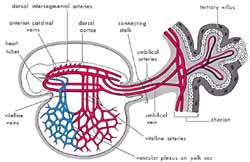 |
The next stage mentioned in the verse is the mudghah stage. The Arabic word mudghah means “chewed substance.” If one were to take a piece of gum and chew it in his or her mouth and then compare it with an embryo at the mudghah stage, we would conclude that the embryo at the mudghah stage acquires the appearance of a chewed substance. This is because of the somites at the back of the embryo that “somewhat resemble teethmarks in a chewed substance.”(see figures 5 and 6).
| Figure 5: Photograph of an embryo at the mudghah stage (28 days old). The embryo at this stage acquires the appearance of a chewed substance, because the somites at the back of the embryo somewhat resemble teeth marks in a chewed substance. The actual size of the embryo is 4 mm. (The Developing Human, Moore and Persaud, 5th ed., p. 82, from Professor Hideo Nishimura, Kyoto University, Kyoto, Japan.) |
|
| | |

Subscribe to:
Posts (Atom)


